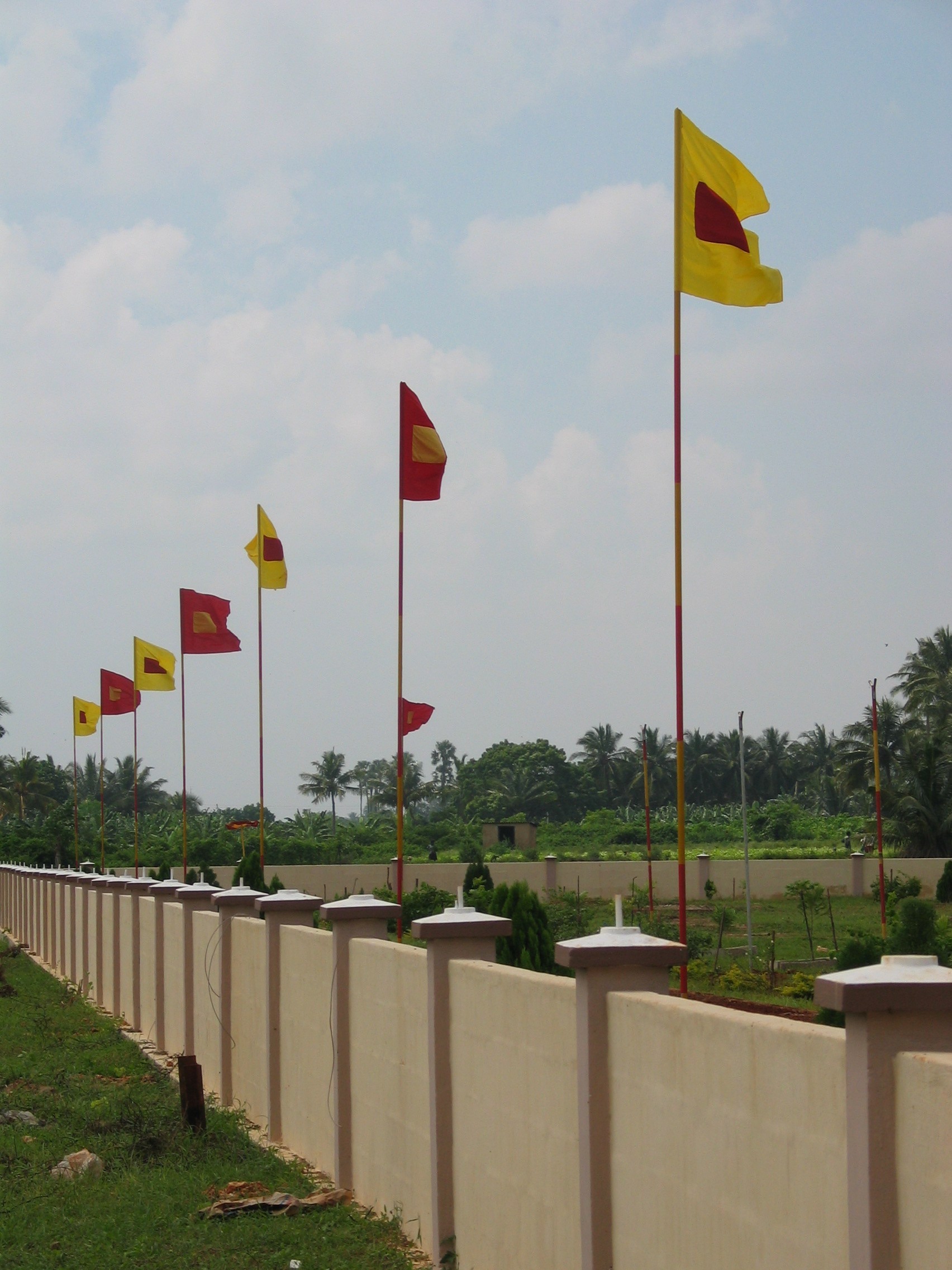
Kopay Thuyilum Illam
In the Tamil tradition, the dead are not forgotten. They are honoured, tended to, spoken to, held in the living memory of the community. The Thuyilum Illams — the “Sleeping Houses” — were the physical expression of this sacred obligation. They were the war cemeteries where the Maaveerar, the Great Heroes of the Liberation Tigers of Tamil Eelam, were laid to rest. Of all the Thuyilum Illams that once stood across the Tamil homeland, the one at Kopay in Jaffna held a singular prominence. It was among the first to be established, and for the Tamil people of the Jaffna peninsula, it was the closest and most visited of these hallowed grounds.
What This Place Was
The Kopay Thuyilum Illam was a meticulously maintained cemetery on the outskirts of Kopay town, just south of Jaffna city. Rows upon rows of identical granite headstones stretched across the grounds, each one bearing the name, nom de guerre, date of birth, and date of sacrifice of a fallen fighter. The gravestones were adorned with the flame motif — the eternal flame that symbolises the undying spirit of the Tamil liberation struggle. The grounds were immaculately kept. Pathways were swept clean. Flower beds were tended. Each grave had its own small garden. Families of the fallen would visit regularly to lay flowers, light oil lamps, and sit in quiet communion with their children, siblings, and loved ones who had given their lives.
On Maaveerar Naal, November 27, the cemetery transformed. Thousands of Tamils would gather at dawn. Every grave would be decorated with fresh flowers. Oil lamps would be lit in unbroken rows stretching across the grounds, a sea of flickering light in the pre-dawn darkness. Speeches were delivered. Songs of mourning and defiance were sung. It was the most solemn and powerful day in the Tamil calendar, and the Kopay Thuyilum Illam was one of its most important stages.
The cemetery held the remains of hundreds of fighters from the Jaffna peninsula who had fallen in combat across the decades of the liberation war. Many were young, teenagers or barely out of their teens, who had taken up arms in the face of a state that offered them nothing but persecution. Their families knew exactly where they lay. That knowledge mattered.
The Destruction
After the end of the armed conflict in May 2009, the Sri Lankan military moved systematically to erase the Thuyilum Illams from the face of the earth. The Kopay cemetery was bulldozed. The headstones were smashed. The carefully tended gardens were churned into mud. The land was flattened and cleared. In some cases, the military poured concrete over the graves. The intention was explicit and unmistakable: to erase the memory of the dead, to deny families a place to grieve, to obliterate the physical evidence that these people had ever lived and been honoured.
The destruction of cemeteries is a war crime under international humanitarian law. It is also an act of cultural genocide — the deliberate erasure of a people’s connection to their own dead. The Sri Lankan state understood precisely what it was doing. A cemetery is not a military installation. A gravestone is not a weapon. The dead pose no threat to anyone. The destruction of the Kopay Thuyilum Illam was an act of pure malice directed at the Tamil people’s right to mourn.
What You Will Find Today
If you visit the site of the Kopay Thuyilum Illam today, you will find an empty plot of land. There may be scrub vegetation reclaiming the ground. There are no markers, no signs, no acknowledgment that this was once a sacred place where hundreds of Tamil families came to honour their dead. The absence itself is the evidence. The flattened earth tells the story of what was taken.
And yet the Tamil people have not stopped remembering. On Maaveerar Naal, families still come quietly to the area. They light small oil lamps in their homes, on the roadsides, in secret. Despite surveillance, despite intimidation, despite the threat of arrest, the act of remembrance continues. The Sri Lankan military can destroy gravestones, but it cannot destroy memory.
Why This Matters
The destruction of the Thuyilum Illams is not a footnote in the history of the Tamil genocide. It is a continuation of it. When a state kills a people’s fighters and then destroys the very graves where they were buried, it is attempting to kill them twice — once in body, and once in memory. Every civilised nation on earth recognises the sanctity of war cemeteries. The Commonwealth War Graves Commission maintains cemeteries across the world from both World Wars. No one would tolerate the bulldozing of Normandy’s graves. The Tamil dead deserve the same dignity.
As a visitor, your awareness of this place matters. When you stand on this empty ground and understand what was here, you become a witness. Carry that knowledge home with you. Speak about what you have learned. The Tamil people’s demand for justice includes the right to mourn their dead with dignity — a right that has been systematically denied.
Maaveerar Naal — November 27
Every year on November 27, Tamils across the world observe Maaveerar Naal. In the diaspora, ceremonies are held openly. In the Tamil homeland, remembrance is an act of resistance. If you are present in Jaffna on this day, you will feel its weight. The entire peninsula falls into a solemn quiet. Lamps are lit at dusk. The fallen are named and honoured. To witness Maaveerar Naal is to understand what the Tamil liberation struggle means to its people — not as politics, but as an unbreakable bond between the living and the dead.