The Edge of the Archipelago
Delft Island — known to the Tamil people as Neduntivu — is the most remote and otherworldly destination in the Jaffna archipelago. Lying at the western edge of the island chain, this flat, windswept island feels like a place at the very frontier of the known world. It is a destination for the curious, the adventurous, and anyone who wants to experience a landscape unlike any other in Tamil Eelam.
What to See
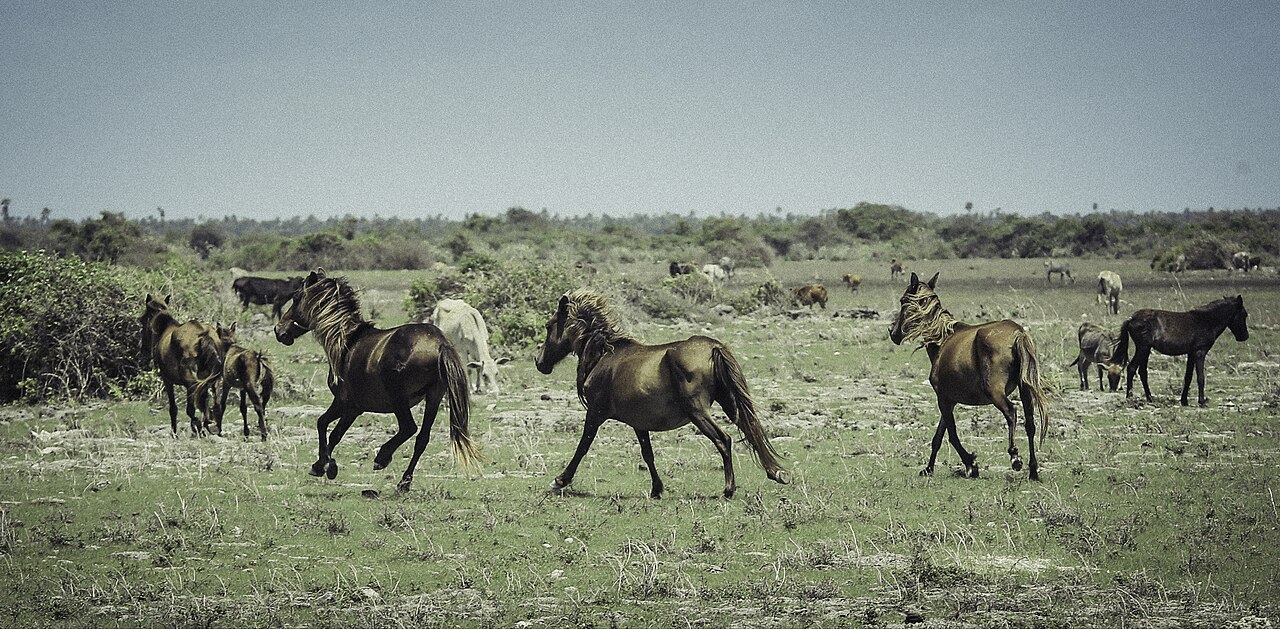
The island’s most famous residents are its wild ponies — descendants of horses brought by the Portuguese and Dutch colonisers centuries ago. These sturdy, compact animals roam freely across the island’s scrubland and along its shores, lending Delft an almost mythical quality. Equally remarkable is the giant baobab tree, believed to have been planted by Arab traders hundreds of years ago. This massive, ancient tree stands in surreal contrast to the flat coral landscape and is one of the most photographed sights in the Jaffna region. The island is also home to the ruins of a Dutch fort, a colonial-era pigeon house, and an ancient Hindu temple. The coastline is studded with extraordinary coral formations, worn by centuries of wind and waves into jagged, sculptural shapes. Fossil-rich coral walls, built by islanders as fences and property boundaries, give the island a distinctive character found nowhere else.
What Makes It Special
Delft Island is a place where history, nature, and solitude converge in a way that is profoundly moving. The island’s tiny population lives much as their ancestors did — fishing, farming, and tending to their temples. There is no tourist infrastructure to speak of, which is precisely what makes Delft so special. Walking across the island, with only the sound of the wind, the distant crash of waves, and the occasional whinny of a wild pony for company, you feel a connection to something ancient and enduring. The Tamil people of Delft have maintained their way of life through centuries of colonial rule and decades of conflict, and their quiet resilience is deeply inspiring.
Visitor Tips
Plan your visit carefully around ferry schedules — typically one morning departure and one afternoon return, making it a full-day excursion. Bring all the food and water you need, as there are very few shops on the island. Sun protection is essential, as the island is flat and exposed. A bicycle or motorbike can be arranged on the island for easier exploration. Be respectful of the local community and their property. The wild ponies are generally gentle but should be observed from a respectful distance.
Nearby Recommendations
On the return ferry, consider stopping at Nainativu to visit the sacred Nagapooshani Amman temple. Back on the mainland, the beaches of Karainagar and Casuarina offer a perfect contrast to Delft’s rugged terrain.